|
|
 |
 |
|
|
||
|
LAWS OF RADICALS
|
||
|
|
||
|
|
|
|
|
|
||
|
LAWS OF RADICALS
|
||
|
|
||
| Property in Symbolic form | Property stated in words | Example |
|
Definition:
|
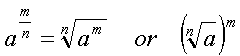
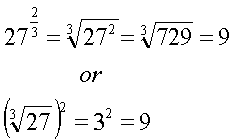
A radical represents a fractional exponent in which the numerator of the fractional exponent is the power of the base and the denominator of the fractional exponent is the index of the radical. |
|
| Top | ||
|
|
||
| Property in Symbolic form | Property stated in words | Example |
|
Product:
|
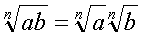
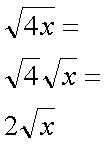
The
nth root of a product is equal to the product of the nth
root of each factor.
Note: the indices must be the same. |
|
| Top | ||
|
|
||
| Property in Symbolic form | Property stated in words | Example |
|
Quotient:
|
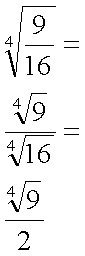
The nth root of a quotient is equal to the nth root of the numerator divided by the nth root of the denominator. |
|
| Top | ||
|
|
||
| Property in Symbolic form | Property stated in words | Example |
|
Exponents:
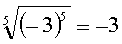
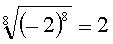
caution: beware of negative bases when using this rule. See examples. |
caution:
beware of negative bases
|
|
| Top | ||
|
|
||